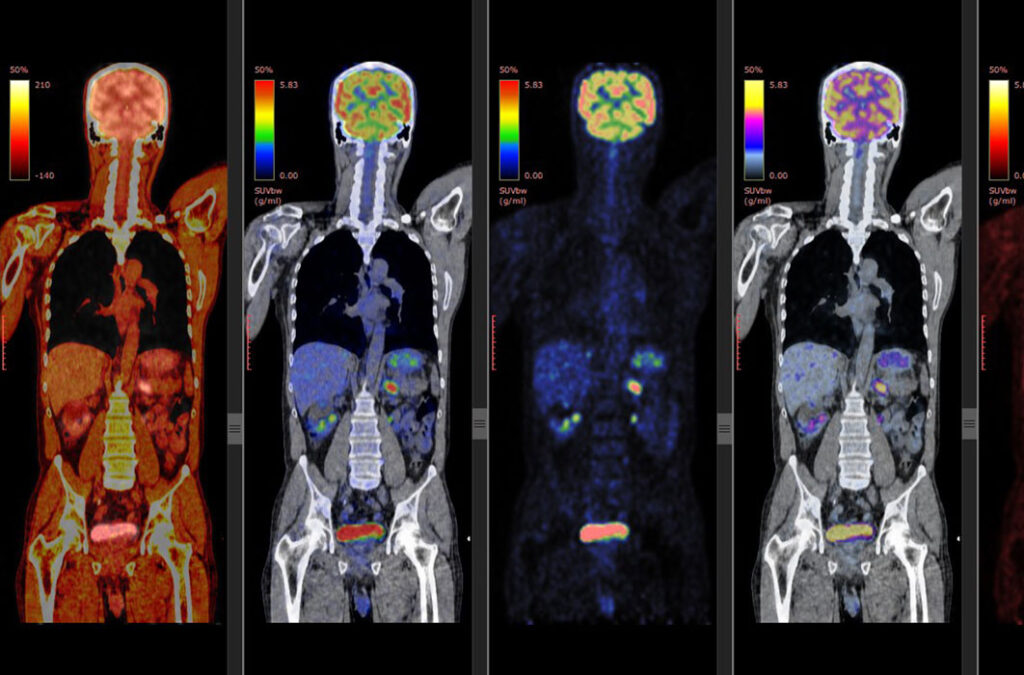
CT Scan and PET Scan: Complete Guide, Uses, Benefits, Procedure and Difference
CT Scan: Complete Guide to Procedure, Uses, Benefits, Preparation and Results
A CT Scan (Computed Tomography Scan) is one of the most widely used advanced diagnostic imaging tests in modern healthcare. It uses X-rays and computer technology to create detailed cross-sectional images of the inside of the body. Compared with a conventional X-ray, a CT scan can provide much more detailed information about organs, bones, blood vessels, soft tissues, and other internal structures.
Doctors may recommend a CT scan when they need a clearer understanding of a medical condition, injury, or abnormality. Depending on the patient’s symptoms and clinical requirements, CT imaging can be performed on different areas of the body, including the brain, chest, abdomen, pelvis, spine, and bones.
For people searching for a CT Scan in Chandigarh, understanding the procedure, preparation, applications, benefits, and possible considerations can help them know what to expect before undergoing the examination.
What Is a CT Scan?
A CT scan, also known as a CAT scan, is a computerized imaging procedure that combines multiple X-ray images to produce detailed cross-sectional pictures of the body.
During a conventional X-ray, images are generally produced from a single direction. A CT scanner, on the other hand, captures multiple X-ray measurements from different angles while the patient passes through the scanner. A computer processes these measurements and creates detailed images, often referred to as slices.
These slices allow doctors and radiologists to examine internal structures in greater detail. In some cases, the images can also be reconstructed into different planes or three-dimensional views.
How Does a CT Scan Work?
A CT scanner has a large circular opening with an examination table that moves through the centre. Inside the scanner, an X-ray tube rotates around the patient while detectors collect information from different angles.
The collected data is processed by a computer to create detailed images of the body.
During the scan, the patient usually needs to remain still. Depending on the type of CT examination, the healthcare team may also ask the patient to hold their breath briefly. Remaining still is important because movement can affect image quality.
The actual scanning process is usually relatively quick, although the complete appointment may take longer depending on preparation and whether contrast material is required.
What Can a CT Scan Detect?
A CT scan can help doctors evaluate a wide range of medical conditions. It can provide detailed information about various organs and body structures.
Depending on the area being examined, CT imaging may help evaluate:
- Head and brain abnormalities
- Chest and lung conditions
- Abdominal problems
- Pelvic conditions
- Bone injuries and fractures
- Certain tumors and abnormal growths
- Internal bleeding
- Infections and inflammation
- Kidney and urinary tract problems
- Blood vessels
- Spinal abnormalities
- Traumatic injuries
A CT scan does not diagnose every medical condition by itself. The images are interpreted together with the patient’s symptoms, medical history, physical examination, and other test results.
CT Scan of the Brain
A CT Brain Scan is commonly used when doctors need detailed images of the brain and skull.
It may be recommended in situations such as head injuries, sudden neurological symptoms, suspected bleeding, certain infections, or other abnormalities.
CT imaging can be particularly useful in emergency situations because it can provide important information quickly.
CT Scan of the Chest
A CT Chest Scan provides detailed images of the lungs, airways, blood vessels, and other structures within the chest.
Doctors may recommend chest CT imaging to investigate abnormalities seen on an X-ray, evaluate certain lung conditions, assess injuries, or examine suspicious areas.
The exact type of CT examination depends on the patient’s symptoms and the clinical question the doctor wants to answer.
CT Scan of the Abdomen and Pelvis
An Abdominal and Pelvic CT Scan can provide detailed images of organs and structures within the abdomen and pelvis.
Depending on the examination, CT imaging may help evaluate the liver, kidneys, pancreas, spleen, intestines, urinary system, and other structures.
Doctors may recommend abdominal CT imaging for unexplained abdominal symptoms, suspected infections, injuries, stones, abnormalities, or other medical concerns.
What Is Contrast-Enhanced CT?
Some CT examinations are performed with a contrast material. Contrast can make certain organs, blood vessels, tissues, or abnormalities more visible on the images.
Contrast may be administered in different ways depending on the examination. For some scans, it may be injected into a vein, while in other situations it may be given orally.
Not every CT scan requires contrast.
Before contrast-enhanced CT, the medical team may ask about allergies, previous reactions to contrast material, kidney problems, medications, and other relevant medical information.
Patients should always provide accurate medical information before the examination.
CT Scan Preparation
Preparation for a CT scan depends on the body part being examined and whether contrast material is required.
Some CT scans require little or no preparation. However, patients undergoing certain examinations may be instructed to avoid eating or drinking for a specific period.
If contrast is planned, additional instructions may be provided.
Before your appointment, inform the healthcare team if you:
- Have had a previous reaction to contrast material
- Have kidney problems
- Have diabetes or take regular medications
- May be pregnant
- Have other relevant medical conditions
- Have been advised to follow specific dietary restrictions
Do not stop prescribed medicines unless your doctor or healthcare professional specifically instructs you to do so.
What Happens During a CT Scan?
When you arrive at the imaging centre, the healthcare team may verify your details and explain the examination.
You may be asked to remove certain metal objects, jewellery, or clothing items depending on the scan.
You will then lie on the CT examination table. The table gradually moves through the scanner.
The technologist may communicate with you during the examination and provide instructions such as remaining still or holding your breath for a few seconds.
If contrast material is being used, you may experience a temporary warm sensation or other short-lived sensations. Tell the healthcare team if you experience anything unusual or concerning.
After the imaging is completed, the images are reviewed by an appropriately qualified radiologist, who prepares a report for the treating doctor.
How Long Does a CT Scan Take?
The duration of a CT examination varies depending on the type of scan, whether contrast is required, and the patient’s individual circumstances.
The actual image acquisition can be quite fast. However, the total appointment time may include registration, preparation, positioning, contrast administration if required, and post-scan instructions.
Your diagnostic centre can provide more specific information about the expected appointment duration.
Is a CT Scan Painful?
A CT scan itself is generally non-invasive and usually does not cause pain.
The patient typically needs to lie still on the examination table while the scanner obtains images.
If contrast material is injected, some people may experience a temporary warm feeling or another brief sensation. Any unusual reaction should be reported to the healthcare team immediately.
Is CT Scan Safe?
CT scans use X-rays and therefore involve exposure to ionizing radiation. Healthcare professionals recommend CT examinations when the expected medical benefit is considered appropriate.
The amount of radiation depends on factors such as the type of scan and the imaging protocol.
If you are pregnant or think you may be pregnant, inform your doctor and the imaging team before the examination so that appropriate decisions can be made.
For children, CT imaging is generally performed when clinically appropriate, with protocols designed according to the patient’s age and examination requirements.
CT Scan and Radiation
Radiation exposure is an important consideration with any X-ray-based imaging test. Modern CT scanners and imaging protocols are designed to obtain the necessary diagnostic information while managing radiation exposure appropriately.
The decision to perform a CT scan should be based on clinical need. Patients should not avoid an examination recommended for an important medical reason without discussing their concerns with their doctor.
If you have questions about radiation exposure, ask your radiologist or treating physician about the specific examination being recommended.
CT Scan vs MRI
CT Scan and MRI are both advanced diagnostic imaging technologies, but they work differently.
CT Scan uses X-rays and is particularly useful for evaluating bones, certain chest and abdominal conditions, trauma, and situations where rapid imaging is important.
MRI (Magnetic Resonance Imaging) uses a magnetic field and radio waves rather than X-rays. MRI can provide excellent detail of many soft tissues, including the brain, spinal cord, joints, and muscles.
The choice between CT and MRI depends on the patient’s symptoms, medical history, body part being examined, urgency, and the clinical information required.
In some situations, CT may be preferred, while in others MRI may provide more suitable information.
CT Scan for Cancer Evaluation
CT imaging can play an important role in the evaluation and management of many cancers.
Depending on the type and location of cancer, CT may be used to identify abnormalities, assess the size and location of a lesion, evaluate nearby structures, help determine the extent of disease, assist with treatment planning, and monitor changes over time.
However, a CT scan alone is not always sufficient to diagnose cancer. Doctors may use CT findings together with biopsy results, laboratory tests, PET imaging, MRI, ultrasound, and other investigations.
CT Scan for Emergency Conditions
One of the major advantages of CT imaging is its ability to provide detailed images relatively quickly.
For this reason, CT can be valuable in emergency and trauma settings. Doctors may use CT imaging when evaluating certain head injuries, internal bleeding, fractures, chest injuries, abdominal trauma, and other urgent medical conditions.
The exact examination is selected according to the patient’s symptoms and clinical situation.
Understanding Your CT Scan Report
After the scan, a radiologist reviews the images and prepares a diagnostic report.
The report may contain technical information about the examination, observations or findings, and an impression or conclusion.
It is important to remember that medical imaging reports can contain technical terminology that may be difficult for patients to interpret independently.
Your treating doctor can explain what the findings mean in relation to your symptoms, medical history, and other investigations.
An imaging finding does not always represent a serious disease. Likewise, a normal CT scan may not completely rule out every possible medical condition.
Why Choose a Professional CT Scan Centre?
When selecting a CT Scan Centre in Chandigarh, patients should consider factors such as appropriate imaging technology, qualified radiology professionals, trained technical staff, proper patient preparation, quality assurance, and reliable reporting.
The goal of diagnostic imaging is not simply to produce an image but to obtain clinically useful information that can assist the treating doctor in making appropriate medical decisions.
Patients should also confirm the exact preparation requirements, appointment details, expected reporting time, and whether contrast material is required before visiting the centre.
CT Scan in Chandigarh
Patients looking for a CT Scan in Chandigarh may come from different parts of the Tricity and nearby areas, including Mohali, Panchkula, Zirakpur, Kharar, and New Chandigarh.
When searching for a CT scan facility, it is useful to consider the type of CT examination recommended by the doctor, availability of appropriate imaging technology, radiologist reporting, patient support, and clear pre-scan instructions.
For specialized examinations, patients should confirm with the centre whether the required CT protocol is available.
Frequently Asked Questions About CT Scan
Is a CT Scan better than an X-ray?
A CT scan provides more detailed cross-sectional information than a conventional X-ray. However, the appropriate test depends on the patient’s medical condition and the information the doctor needs.
Does every CT Scan require contrast?
No. Many CT examinations can be performed without contrast. Whether contrast is needed depends on the body part and the clinical purpose of the scan.
Can I eat before a CT Scan?
It depends on the type of examination. Some scans require fasting, while others do not. Always follow the instructions provided by your doctor or diagnostic centre.
Can I drive after a CT Scan?
For many routine CT scans, patients can generally return to their normal activities. However, if you received medication or have specific medical instructions, follow your healthcare provider’s advice.
How often can a CT Scan be performed?
There is no single schedule that applies to everyone. CT scans should be performed when clinically indicated. Your doctor will determine whether repeat imaging is necessary based on your condition.
Who interprets a CT Scan?
CT images are generally interpreted by a radiologist, who prepares a report that is shared with the treating doctor.
Conclusion
A CT Scan is an important diagnostic imaging technology that provides detailed information about the body’s internal structures. From evaluating injuries and infections to examining organs, blood vessels, tumors, and other abnormalities, CT imaging has a wide range of medical applications.
The procedure is generally quick and non-invasive, although preparation requirements can vary depending on the type of examination and whether contrast material is required.
If you have been advised to undergo a CT Scan in Chandigarh, follow the preparation instructions provided by your healthcare team and discuss any concerns or medical conditions before the examination. The right imaging test should always be selected based on your individual clinical requirements and your doctor’s recommendation.
Medical Disclaimer: This article is intended for general educational and informational purposes only. It does not replace professional medical advice, diagnosis, or treatment. The need for a CT scan, type of scan, use of contrast material, and interpretation of results should be determined by a qualified healthcare professional.